Holidays in Jeju
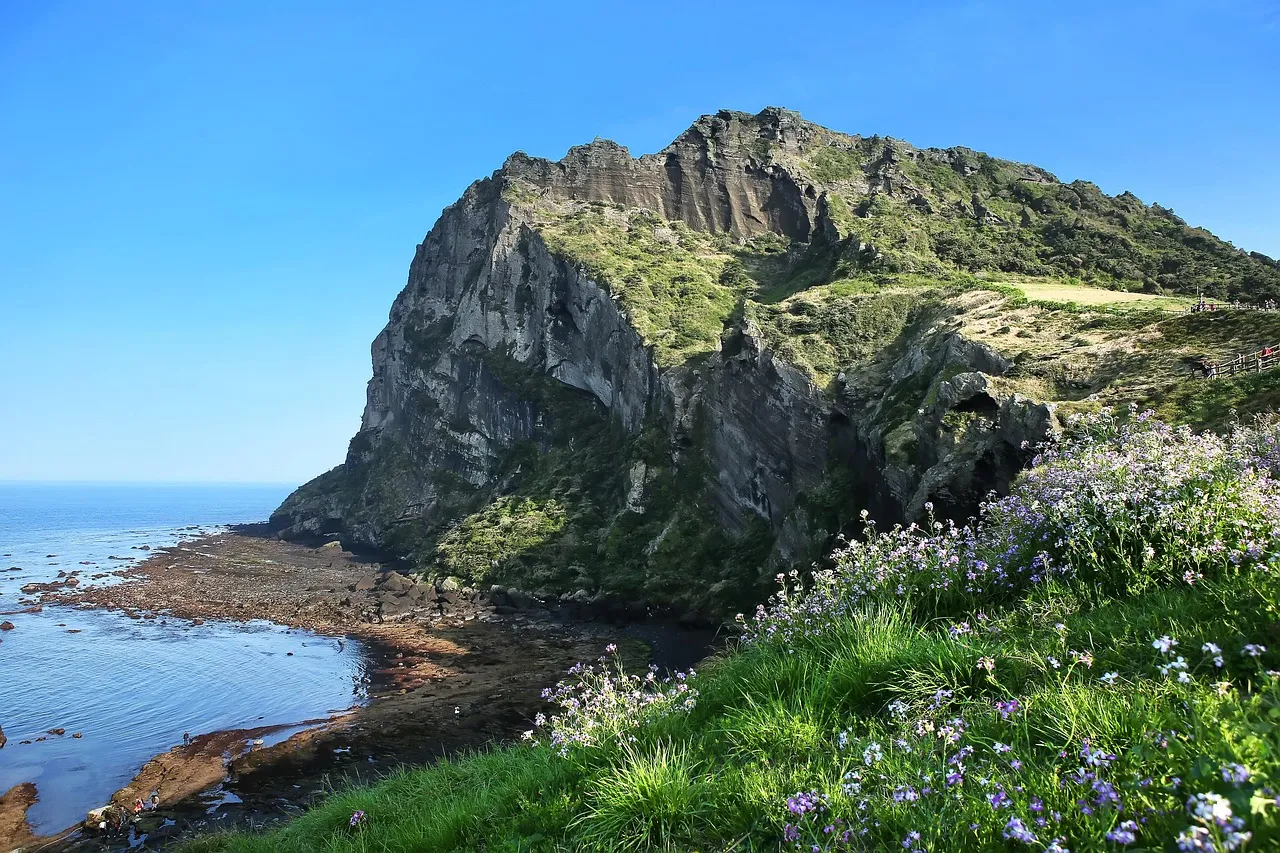
South Korea's volcanic holiday island, with a crater rising from the sea, lava tubes, waterfalls, tangerine farms and black-rock beaches. Here's what Jeju is like, when to go and how long to stay.

UK passport holders are currently exempt from Korea's K-ETA, but the rules can change, so check GOV.UK before you book.
Temperatures are the average daytime high in °C.
April, May and October are best, mild and mostly dry for walking, with yellow canola flowers in spring. July and August are hot and good for the beaches but busy with Korean holidaymakers. Late summer can bring typhoons. Winter is cool and windy but it's tangerine season.
Climb the tuff cone for the view into its crater, ideally at sunrise.
South Korea's highest mountain. The summit trails need booking ahead online.
Walk into a huge lava tunnel, one of the longest in the world.
A long coastal walking route split into easy sections.
A small island by ferry, best seen by e-bike, with pale sandy beaches.
Watch the island's famous women divers come ashore, and try fresh seafood.
A waterfall in a lush gorge near Seogwipo, lit up at night.
Four to six days covers the east and west, a climb of Seongsan and a day on Udo. Add Seoul or Busan for a longer trip.
April, May and October, around 18 to 22°C. Summer is hot and busy, with typhoon risk in late summer.
Fly from Seoul in about an hour, on one of the world's busiest air routes, or from Busan. Some flights also arrive from elsewhere in Asia.
It helps, but you'll need an International Driving Permit. Buses cover most sights, and taxis and tours fill the gaps.
Very. There are easy walks, beaches, lava caves, theme museums and lots of good-value seafood and barbecue.
Put Jeju on standby with everyone's other ideas. You each spread your points in secret, get one veto, and the draw picks where you go.