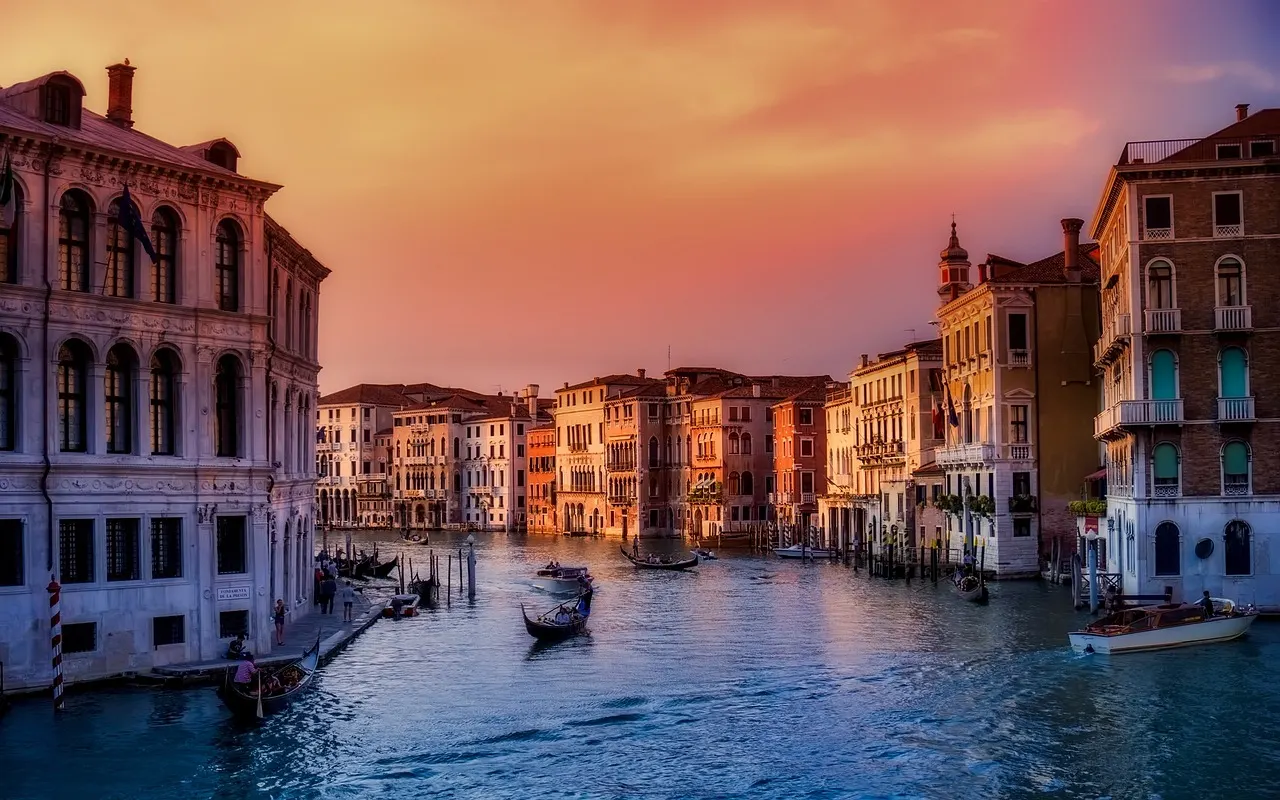
Holidays in Venice
Canals instead of streets, grand palaces and quiet backwaters in one of the world's most unusual cities. Here's what Venice is like, when to go and how long to stay.

Day visitors pay an access fee on busy days in spring and summer, but overnight guests are exempt. The EU is bringing in new entry checks, so check the rules on GOV.UK before you book.
Temperatures are the average daytime high in °C.
April, May, September and October are the best times, mild enough to walk all day with fewer crowds than summer. July and August are hot, humid and packed. Carnival in February is magical but busy. Late autumn and winter bring misty mornings and the odd acqua alta flood, but also the quietest streets.
Golden mosaics cover the domes. Book a timed slot to skip the queue.
The seat of the old Venetian republic, with huge painted halls and the Bridge of Sighs.
Line 1 crawls the whole canal past palaces. It's far cheaper than a gondola.
The quieter neighbourhoods where Venetians live. Stop at a bacaro for cicchetti and a spritz.
Boat over to the glassworks of Murano and the brightly painted fishing houses of Burano.
The best collection of Venetian paintings, from Bellini to Titian.
Two to three days covers the main sights and an island trip. Stay overnight if you can, as the city empties out in the evening.
Day visitors pay an access fee on set busy days, mostly in spring and summer. If you stay overnight you're exempt but still need to register through your hotel.
Hotels and canal-side restaurants are, but eating cicchetti at bars and riding the vaporetto keeps costs down.
Buses run to Piazzale Roma, or take the Alilaguna water bus straight into the city.
Put Venice on standby with everyone's other ideas. You each spread your points in secret, get one veto, and the draw picks where you go.