Holidays in Seville
Orange trees, Moorish palaces and flamenco in the warm, lively capital of Andalusia. Here's what Seville is like, when to go and how long to stay.

The EU is bringing in new entry checks, so check the rules on GOV.UK before you book.
Temperatures are the average daytime high in °C.
March to May and October are the best times, warm and sunny with orange blossom in spring. Holy Week and the April Fair fill the city with processions and parties, so book early. July and August are very hot, often around 36°C, and many locals leave. Winter is mild and sunny, ideal for sightseeing.
A royal palace of tiled courtyards and gardens, still used by the Spanish royal family. Book ahead.
One of the world's largest cathedrals. Walk up the ramps of the old minaret for city views.
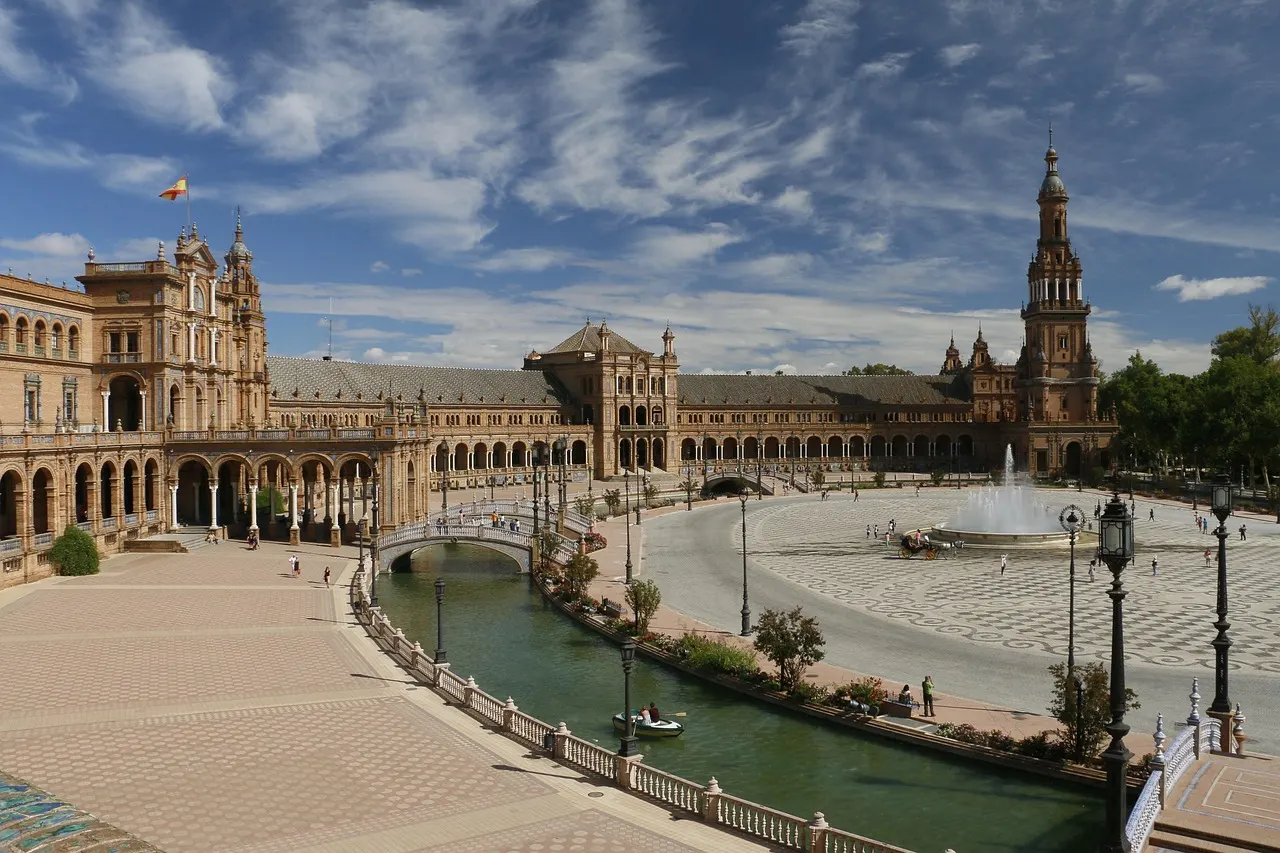
A huge semicircle of tiled alcoves for every Spanish province, with rowing boats on the canal.
The old Jewish quarter, a tangle of whitewashed lanes, squares and tapas bars.
Catch a small tablao show in Triana or Santa Cruz, or visit the Flamenco Dance Museum.
A giant wooden canopy with a walkway on top and great views at sunset.
Two to three days covers the main sights. Add more for day trips to Córdoba, Cádiz or the white villages.
July and August are very hot, often around 36°C. Sightsee early, rest in the afternoon and go out late like the locals.
The Feria de Abril follows two weeks after Easter, so dates change each year. Hotels get booked up and prices rise.
Yes. Córdoba is under an hour by fast train, and Cádiz and Ronda are easy by train or bus.
Put Seville on standby with everyone's other ideas. You each spread your points in secret, get one veto, and the draw picks where you go.