Holidays in Meteora
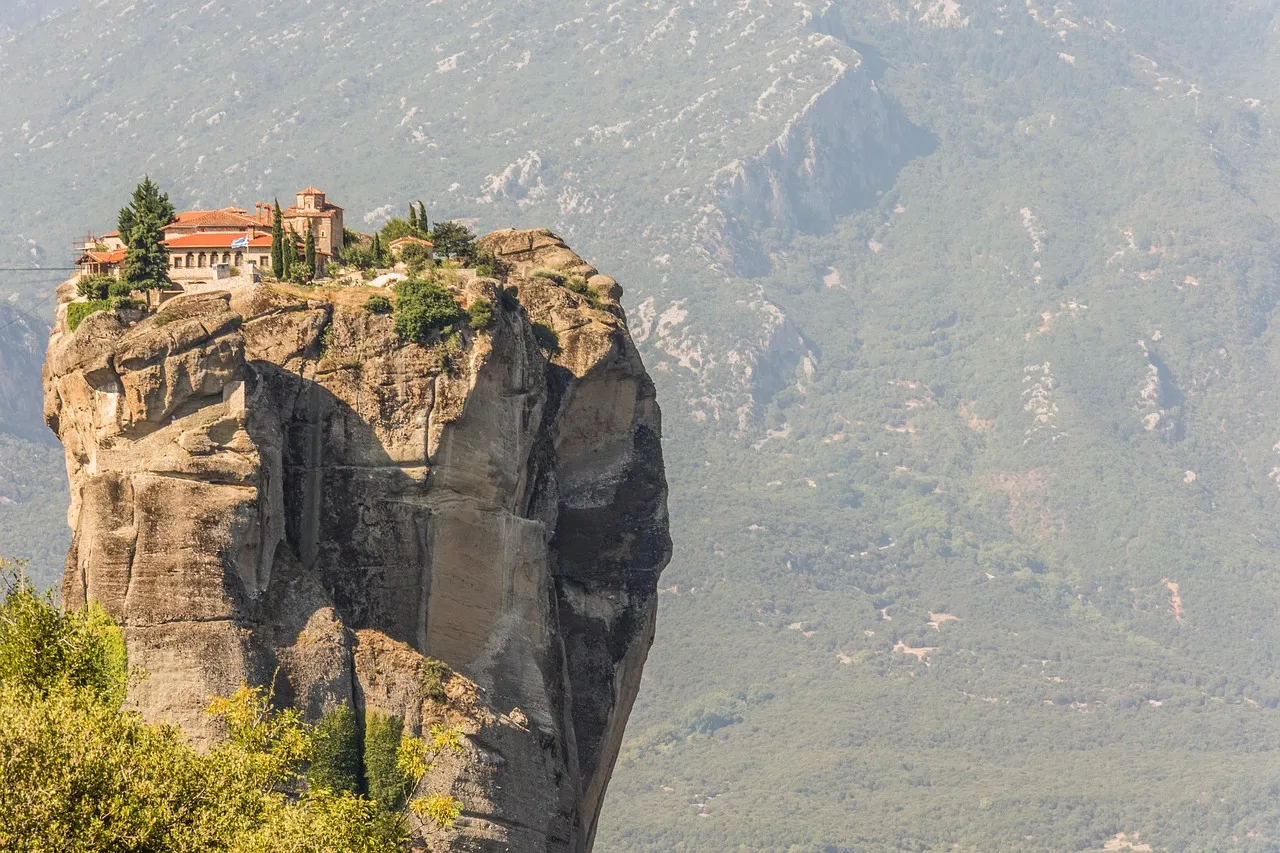
Monasteries perched on top of giant sandstone pillars rising from the plains of central Greece, a truly otherworldly sight. Here's what Meteora is like, when to go and how long to stay.

The EU is bringing in new entry checks, so check the rules on GOV.UK before you book.
Temperatures are the average daytime high in °C.
April, May, September and October are best for walking between monasteries. July and August are very hot. Winter is cold and misty, which can look magical. Each monastery closes one day a week, so check before you go.
The largest monastery, with a museum and a frescoed church.
A monastery with an old rope-and-net lift still on show.
A nunnery reached by a bridge, on a narrow pillar.
Watch the sun set over the rocks from the viewpoints by the road.
Old paths climb between the monasteries from Kastraki.
Climbing routes for beginners and experts on the pillars.
Yes. It's one of the most spectacular sights in Greece, a UNESCO site of monasteries on top of rock towers.
One or two days covers the monasteries and a sunset. Stay a night in Kalambaka or Kastraki.
Fly to Thessaloniki or Athens, then take the train to Kalambaka, about 3 to 4 hours, or drive.
Cover shoulders and knees. Women should wear skirts, which are usually lent at the entrances.
Spring and autumn, around 20 to 28°C.
Put Meteora on standby with everyone's other ideas. You each spread your points in secret, get one veto, and the draw picks where you go.