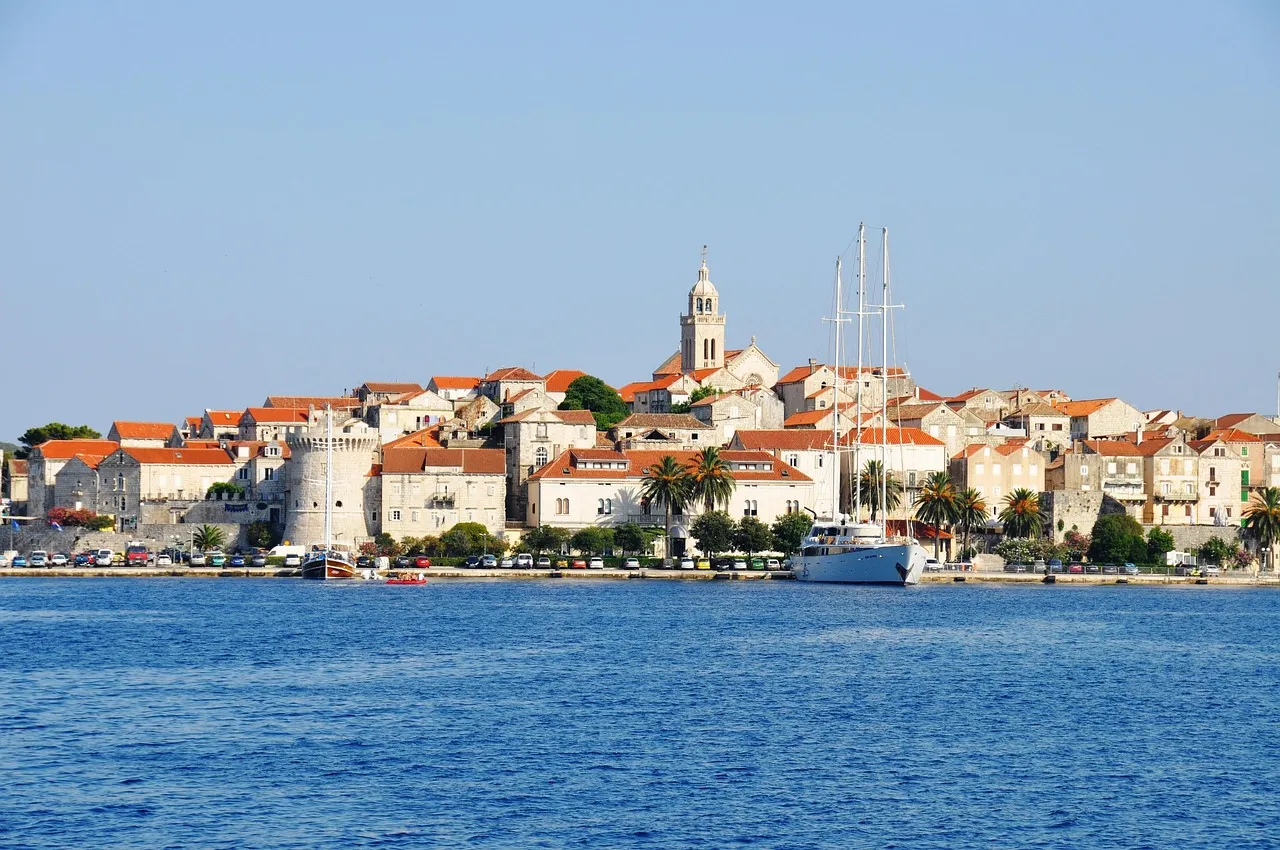
Holidays in Korčula
A green Dalmatian island with a walled medieval town shaped like a fish skeleton, vineyards and quiet coves. Here's what Korčula is like, when to go and how long to stay.

The EU is bringing in new entry checks, so check the rules on GOV.UK before you book.
Temperatures are the average daytime high in °C.
June and September are ideal, with warm sea and calm towns. July and August are hot and busy. The Moreška sword dance is performed in Korčula Town in summer. The season runs from May to October.
Herringbone streets inside the walls, designed to catch the breeze.
The house and tower said to be the explorer's birthplace, with a view.
A traditional dance-drama performed in summer.
Sandy beaches and the local white wine, Grk.
A small island with a monastery and tame deer, by taxi boat.
Walls, oysters and vineyards across the channel.
Yes. Its old town is one of the prettiest in Croatia, and the island is calmer than Hvar.
Fly into Dubrovnik or Split, both with direct flights from the UK, then take a catamaran or a bus and ferry, about 2 to 3 hours.
June and September, around 26 to 27°C.
A few. Lumbarda's Pržina and Bilin Žal are sandy; most others are pebbles and rocks.
Korčula is quieter, with a more medieval old town. Hvar has more beaches and nightlife.
Put Korčula on standby with everyone's other ideas. You each spread your points in secret, get one veto, and the draw picks where you go.