Holidays in Split
A Roman emperor's palace turned old town, a palm-lined seafront and ferries to the Dalmatian islands. Here's what Split is like, when to go and how long to stay.

The EU is bringing in new entry checks, so check the rules on GOV.UK before you book.
Temperatures are the average daytime high in °C.
May, June and September are the best months, warm enough to swim without the peak crowds. July and August are hot and very busy, with cruise passengers in the old town. April and October suit sightseeing and island trips, though some ferries are less frequent. Winter is quiet and cool.
Wander streets built into the walls of a Roman palace. The cellars and bell tower cost a small fee.
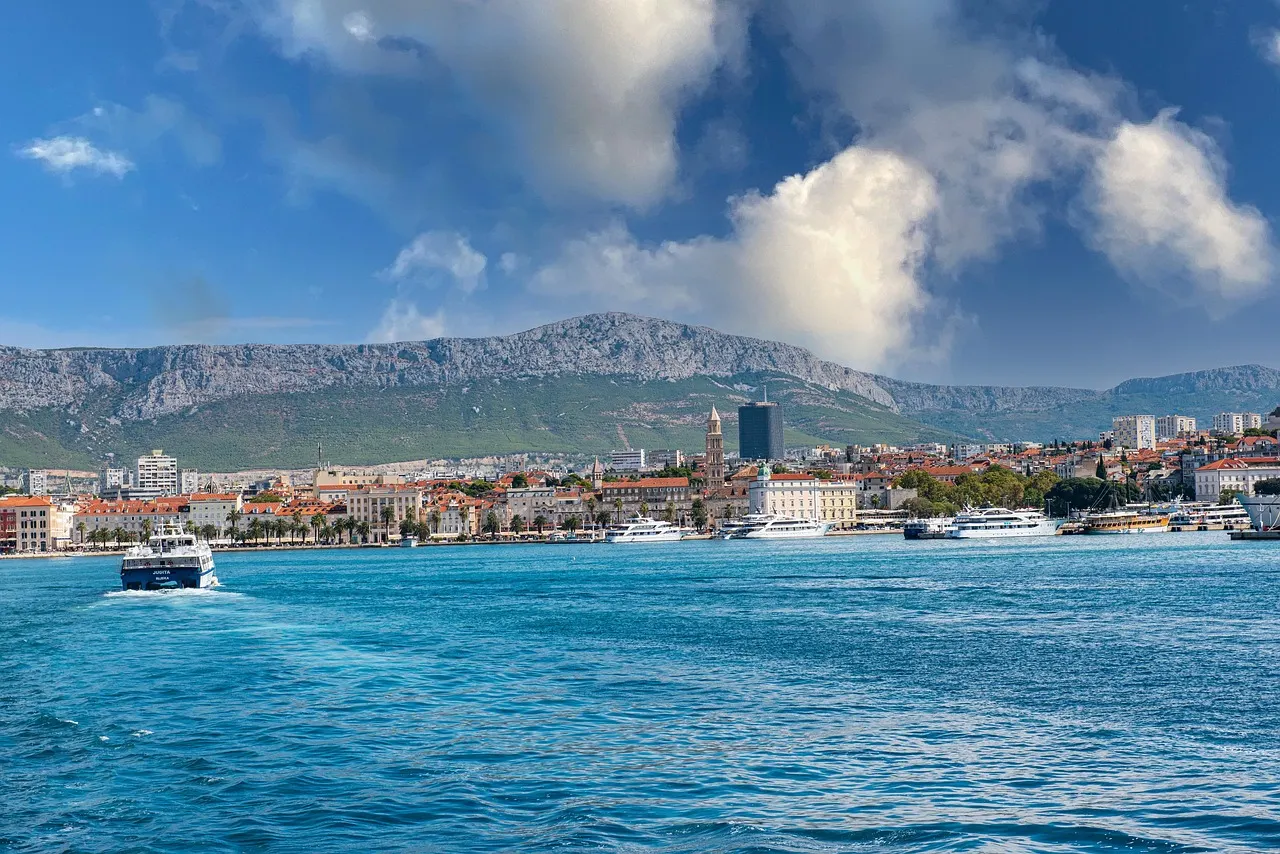
The palm-lined seafront, packed with cafés, people and evening strolls.
Wooded paths and steps up the hill on the edge of the city, with views and small beaches.
The city beach, a sandy bay where locals play picigin in the shallows.
Catamarans and ferries run to Hvar Town and to Bol's famous Zlatni Rat beach.
Waterfalls and wooden walkways about an hour's drive away.
Two days covers the old town. Add three or four more for islands and Krka.
The city beaches are handy but busy. The best beaches are on the islands, a short ferry ride away.
Split is livelier and better for island hopping. Dubrovnik has the famous walls but is busier and pricier.
No, the old town is walkable and ferries and buses cover the islands and coast.
Put Split on standby with everyone's other ideas. You each spread your points in secret, get one veto, and the draw picks where you go.