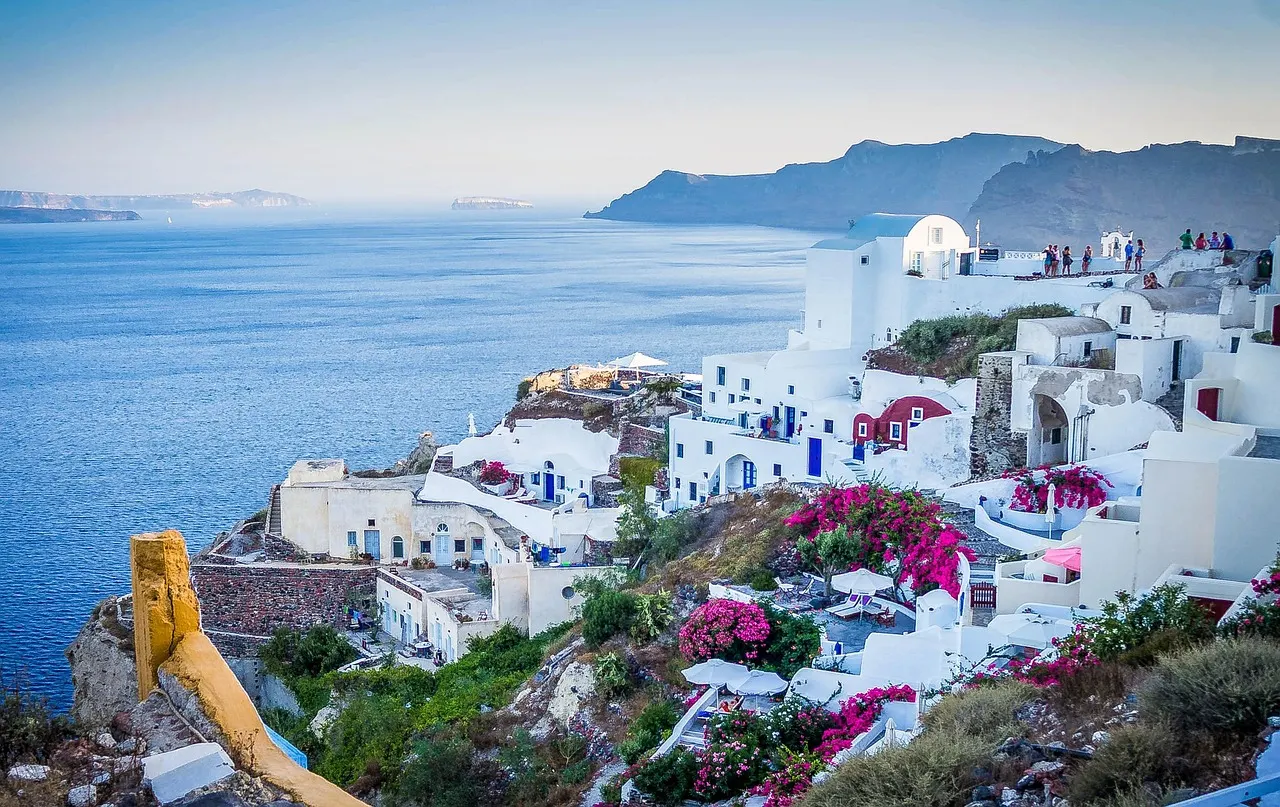
Holidays in Santorini
White villages on the rim of a flooded volcano, with famous sunsets and black sand beaches. Here's what Santorini is like, when to go and how long to stay.

The EU is bringing in new entry checks, so check the rules on GOV.UK before you book.
Temperatures are the average daytime high in °C.
May, June, September and early October are the best times, warm enough to swim without the peak crowds. July and August are hot, windy and very busy, especially in Oia at sunset and when cruise ships call. From November to March many hotels and restaurants close, though Fira stays open.
Watch the sun drop behind the caldera from the castle ruins. Arrive early, or find a quieter spot in Imerovigli.
A clifftop path of about 10 km along the caldera rim, best done in the morning.
A Bronze Age town buried by the eruption, with streets and houses preserved under a modern roof.
Sail to the volcanic islands, swim in the hot springs and stop for a sunset dinner.
Dramatic red cliffs at one, a long black sand beach with sunbeds at the other.
Santorini's vines grow in baskets on the ground. Try the crisp Assyrtiko at a winery with caldera views.
Yes, it's one of the priciest Greek islands, especially caldera hotels. Staying in Kamari or Perissa costs less.
Three to four days covers the main sights. Many people pair it with a quieter island like Naxos or Milos.
The beaches are volcanic sand or pebbles, which get very hot. Come for the views first; for long beach days, Naxos is better.
Yes, in summer several airlines fly direct. In winter you'll usually go via Athens.
Put Santorini on standby with everyone's other ideas. You each spread your points in secret, get one veto, and the draw picks where you go.