Holidays in Rhodes
A medieval walled town, a whitewashed village under an acropolis and long beaches on Greece's sunny south-eastern edge. Here's what Rhodes is like, when to go and how long to stay.

The EU is bringing in new entry checks, so check the rules on GOV.UK before you book.
Temperatures are the average daytime high in °C.
May, June, September and October are the best times, with hot sunshine, a warm sea and fewer crowds. July and August are hot and busy but cooled by the meltemi wind. Rhodes is one of the sunniest Greek islands, and the season runs later into October than most. In winter Rhodes Town stays open but resorts close.
Europe's largest lived-in medieval town, inside walls built by the Knights of St John.
The knights' castle at the top of the Street of the Knights, with mosaic floors.
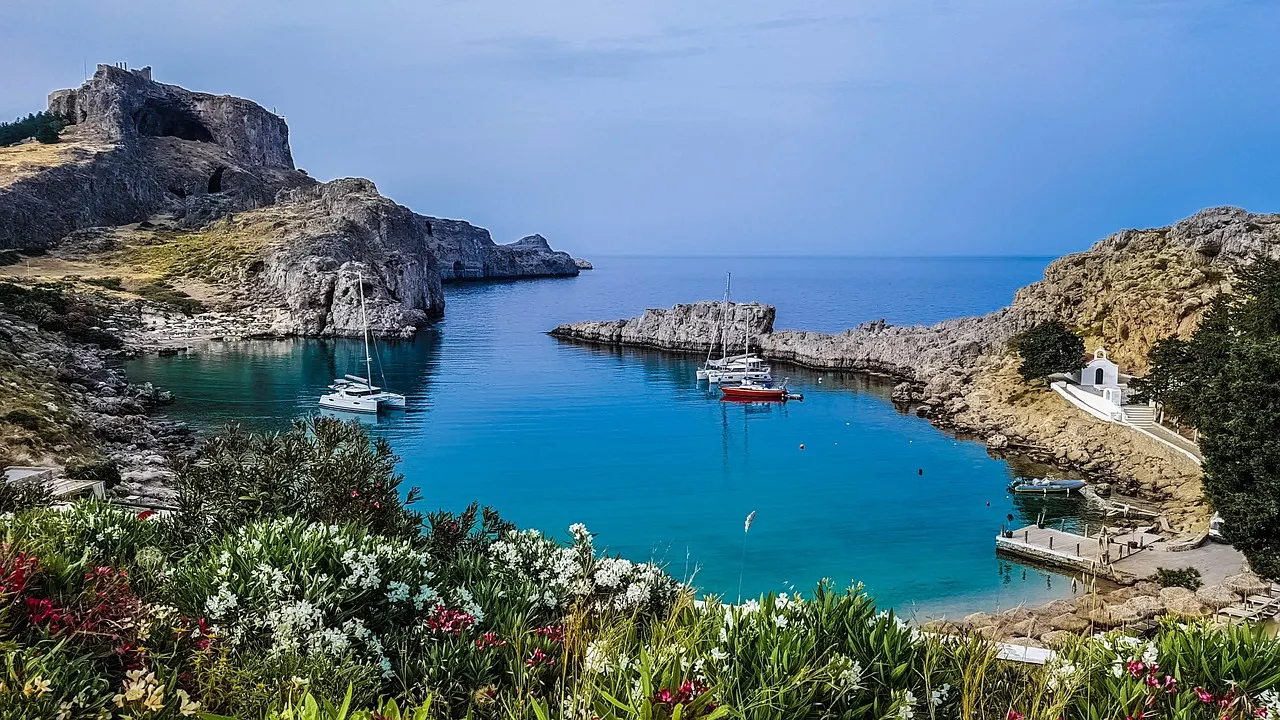
White houses below a clifftop acropolis, with St Paul's Bay just around the headland.
A small rocky cove with clear green water near Faliraki. Go early to get a spot.
At the island's southern tip, a sandbar splits calm water from waves. It's a windsurfing favourite.
Ferries run to this pretty island of pastel captains' houses around a harbour.
Lindos and Pefkos suit couples and quiet beach days. Faliraki is livelier. Rhodes Town is best for sightseeing and the evenings.
Yes, it's still warm, often around 25°C, with a warm sea. It's one of the best Greek islands for late sun.
Buses link Rhodes Town with Lindos and the main resorts. A car helps you reach quieter beaches and the south.
A week covers beaches, the old town, Lindos and a boat trip.
Put Rhodes on standby with everyone's other ideas. You each spread your points in secret, get one veto, and the draw picks where you go.