Holidays in Gjirokastër
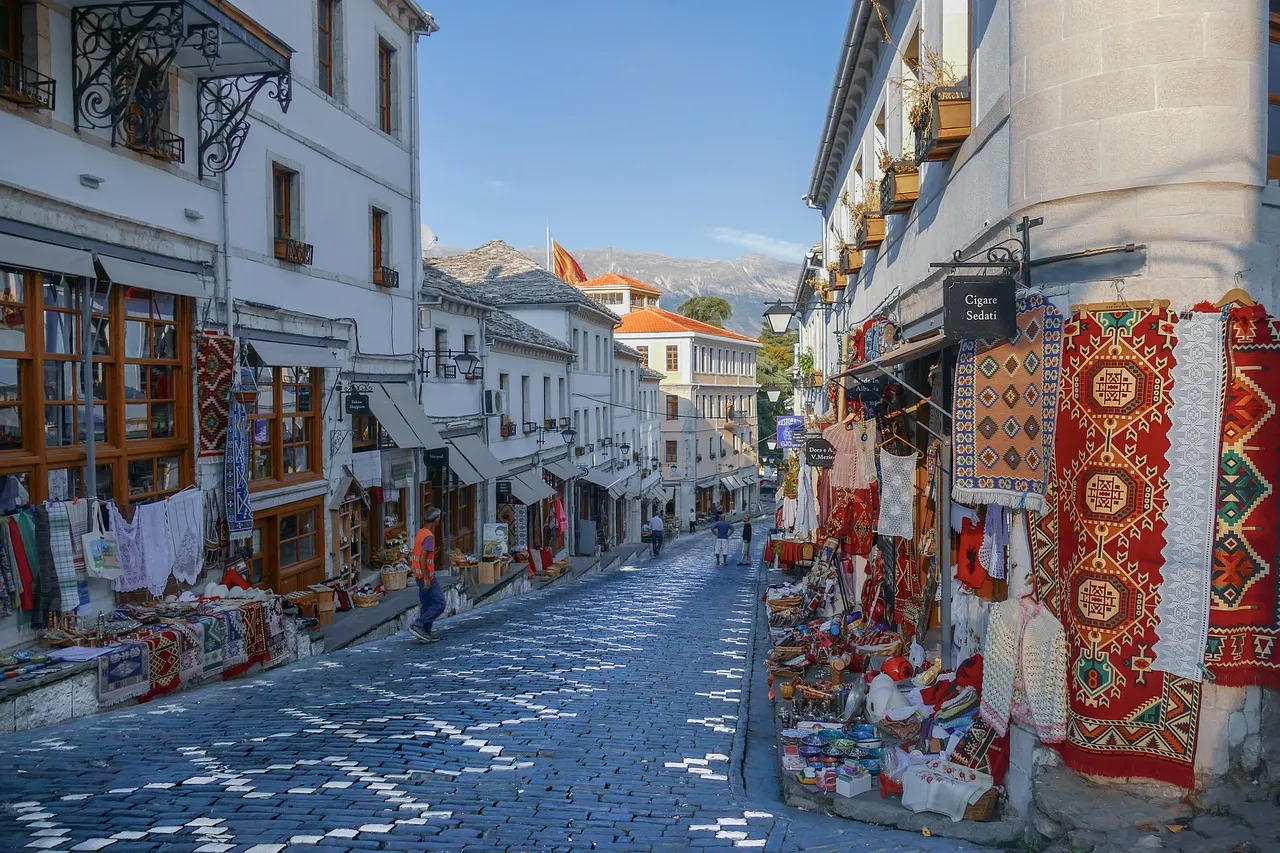
Albania's 'city of stone', a hillside of Ottoman tower houses with slate roofs below a huge castle, in a valley of mountains. Here's what Gjirokastër is like, when to go and how long to stay.

Euros are often accepted in tourist areas, but prices are better in lek. Check entry rules on GOV.UK before you book.
Temperatures are the average daytime high in °C.
April, May, September and October are best for walking the steep streets. July and August are very hot but combine well with the beaches at Saranda and Ksamil, an hour away. Winter is cold and rainy.
A huge hilltop fortress with old cannons and a war plane.
A traditional Ottoman tower house, shown by its family.
Stone lanes of craft shops and cafés.
A bunker built under the city in communist times.
A deep, glowing blue spring in the woods, 40 minutes away.
Ancient ruins by a lagoon near Saranda, about 1 hour 15 minutes away.
Yes. It's a UNESCO-listed old town, unlike anywhere else, and easy to add to a beach holiday in southern Albania.
Fly into Tirana, about 3 hours away, or to Corfu and take the ferry to Saranda, an hour away.
One or two days covers the town and the Blue Eye.
Spring and autumn, around 19 to 28°C.
Albania is generally considered safe and welcoming to visitors. Check the latest GOV.UK travel advice before you book.
Put Gjirokastër on standby with everyone's other ideas. You each spread your points in secret, get one veto, and the draw picks where you go.