The short answer
- Day 1Old centre and Hofburg
- Day 2Schönbrunn and Belvedere
- Day 3Museums, market, Prater
- Flight from Londonabout 2¼ hours
- Airport trainabout 16 minutes
Vienna is compact, clean and easy to get around, with a public transport network that reaches every sight in this plan. The centre is walkable; the two big palaces are a short tram or underground ride out.
The 3-day plan at a glance
| Day | Morning | Afternoon | Evening |
|---|---|---|---|
| 1 | St Stephen's Cathedral | Hofburg and the Spanish Riding School | Coffee house, then the opera |
| 2 | Schönbrunn Palace | Belvedere and The Kiss | Dinner in a Heuriger wine tavern |
| 3 | MuseumsQuartier or Kunsthistorisches | Naschmarkt | Giant Ferris wheel at the Prater |
If you're there between mid-November and Christmas, swap any evening for the Christmas markets, the biggest of which fills the square in front of the city hall.
Day 1: the old centre and the Hofburg
Start at St Stephen's Cathedral, with its patterned tiled roof, in the very middle of the old town. Climb the south tower for the view, or take the lift up the north tower.
From there, walk along the Graben and Kohlmarkt to the Hofburg, the Habsburgs' huge winter palace. Inside are the imperial apartments, the Sisi Museum and the silver collection, and the Spanish Riding School, where the white Lipizzaner horses train.
- Coffee house: stop at one of the classic Viennese cafés for coffee and a slice of Sachertorte or apple strudel.
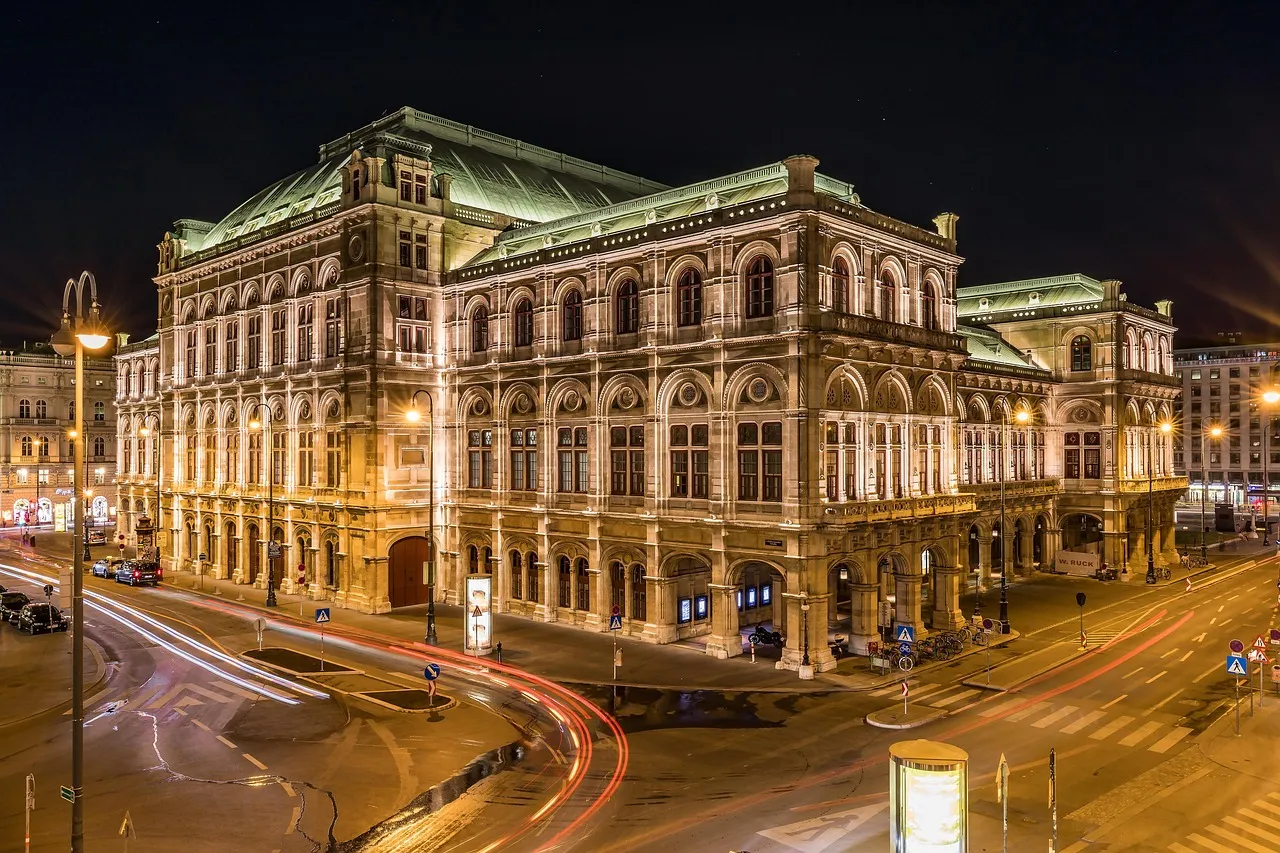
- Evening: the State Opera sells cheap standing tickets on the day for many performances, a famous Vienna bargain.
Day 2: Schönbrunn and the Belvedere
Schönbrunn Palace, the Habsburgs' summer residence, is on the U4 underground line, about 15 minutes from the centre. Book a timed ticket for the state rooms, then walk up through the gardens to the Gloriette for the view back over the palace and the city.
In the afternoon, head to the Belvedere, two baroque palaces facing each other across formal gardens. The Upper Belvedere holds the world's biggest collection of Gustav Klimt's paintings, including The Kiss. In the evening, take a tram out to the edge of the city to a Heuriger, a traditional wine tavern in the vineyards, where winemakers serve their own new wine.
Day 3: museums, markets and the Prater
Vienna has more great museums than you can see in a day, so pick one or two:
- Kunsthistorisches Museum: old masters, including the world's largest collection of paintings by Pieter Bruegel the Elder.
- MuseumsQuartier: modern art at the Leopold Museum, with its Schiele collection, and MUMOK.
- Natural History Museum: across the square from the Kunsthistorisches, with the Venus of Willendorf.
At lunchtime, walk to the Naschmarkt, the city's long open-air market, for food stalls and cafés. End the trip at the Prater, a big park with a funfair and the Riesenrad, the giant Ferris wheel from 1897, which has wooden cabins and great views at dusk.
Getting there and getting around
Vienna is about two and a quarter hours' flight from London, with direct flights from several UK airports. The City Airport Train runs non-stop to Wien Mitte in about 16 minutes. The S-Bahn takes a little longer but costs much less.
- Getting around: a 24, 48 or 72-hour pass covers the underground, trams and buses.
- Money: Austria uses the euro.
- Where to stay: inside or just outside the Ring, the boulevard around the old town, puts everything in this plan within easy reach.
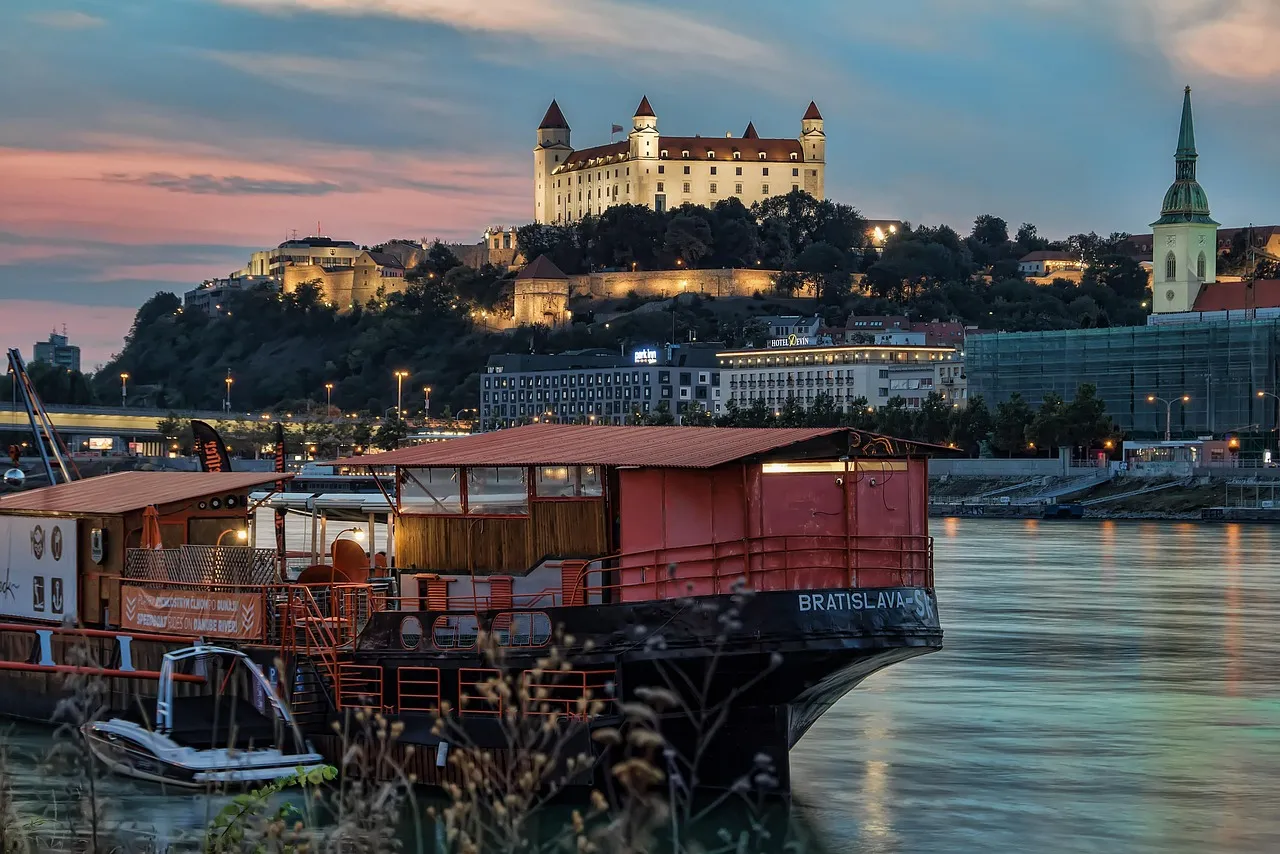
- Add a city: Bratislava is an hour away, and Budapest and Prague are easy by train.
When to go
May, June and September are warm and green, and the Danube Island is good for swimming. July and August can be hot, and many locals leave the city.
From mid-November to Christmas, Vienna is one of the best Christmas market cities in Europe. Our post on Vienna or Prague at Christmas compares the two, and best Christmas markets in Europe has the 2026 dates.
For more short trips, see our 3-day city break post. If you can't agree where to go next, put a few cities in a draw on somewhere.party.