The short answer
Both are around two hours' flying from London, both are cold in December (days usually just above freezing), and both work well for three or four nights.
When the markets are open in 2026
The timing is one of the biggest differences, and it matters if you're going early or late in the season.
Vienna starts earlier and has more choice in November:
- Schönbrunn Palace: listed from 6 November 2026, running into early January 2027, with a New Year market at the end.
- Rathausplatz (the big one outside the City Hall): 13 November to 26 December 2026.
- Spittelberg: 13 November to 23 December 2026, in narrow lanes of old houses, with more craft stalls.
Prague starts later but runs through New Year:
- Old Town Square and Wenceslas Square: listed from 28 November 2026 to 6 January 2027.
- Smaller neighbourhood markets, like Náměstí Míru and Náměstí Republiky, usually open in late November and close on Christmas Eve.
So for a trip in mid or late November, Vienna is the safer bet. For a trip between Christmas and New Year, Prague's main markets are still going while Vienna's Rathausplatz has closed. Dates were checked in October 2026; hours on 24 to 26 and 31 December are often shorter, so check the organisers' sites before you go.
What each one feels like
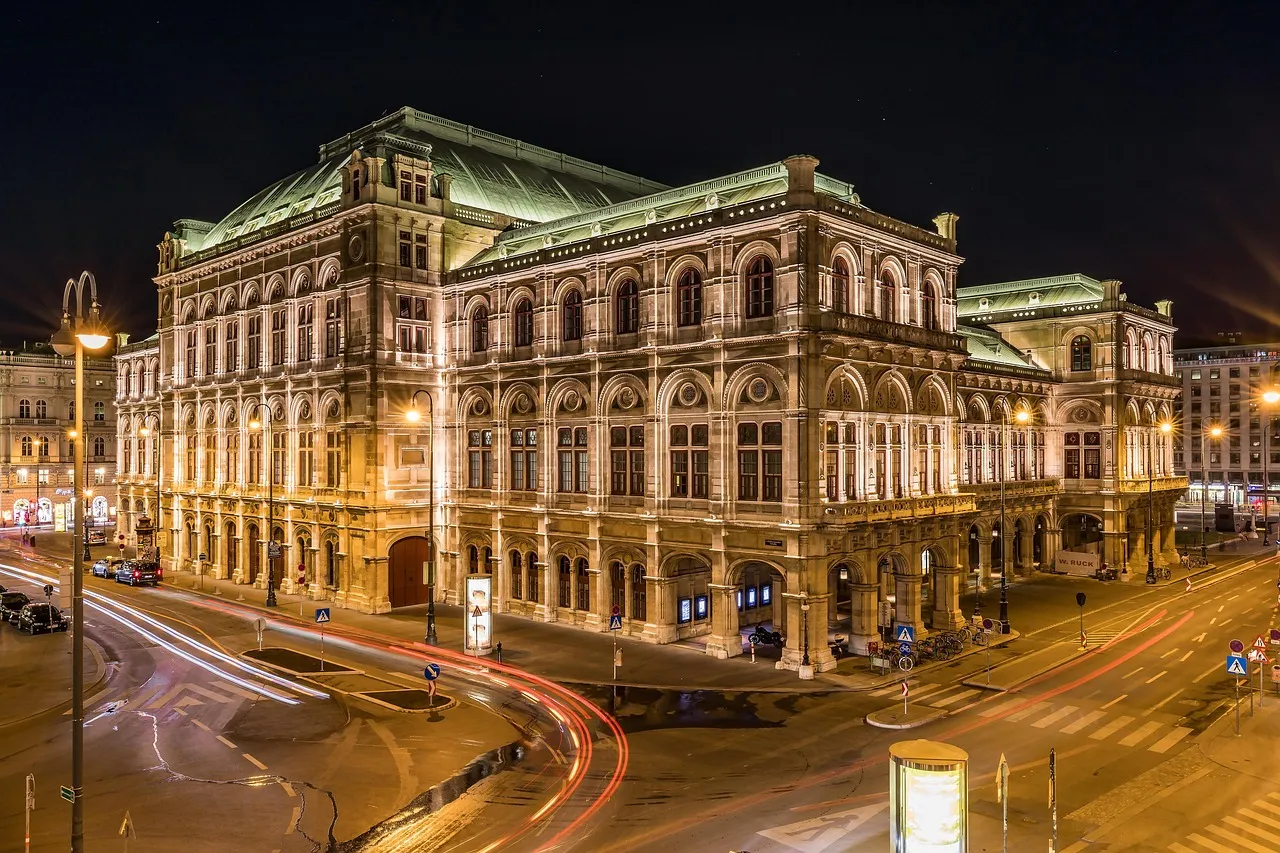
Vienna does Christmas on a big scale. The Rathausplatz market sits in front of a lit-up neo-Gothic City Hall, with an ice rink in the park beside it. Schönbrunn's market is in the palace courtyard, and Spittelberg feels more like a village. There are around a dozen sizeable markets, so you can walk between several in an evening. Between markets, there's the Vienna State Opera, Advent concerts in churches, and coffee houses for warming up.
Prague is more compact and more romantic. The Old Town Square market has a huge tree in front of the Týn Church, with the Astronomical Clock next door, and it's a short walk across Charles Bridge to the castle. The flip side is crowds: the main squares get very busy, especially on December weekends. Go on a weekday, or early in the morning for the old town without the crowds.
If you love music and grand buildings, Vienna wins. If you want to wander cobbled lanes and feel like you're inside a Christmas card, Prague does.
Costs
Prague is usually the cheaper of the two. The Czech Republic uses the koruna, and food, beer and mid-range hotels generally cost noticeably less than in Vienna, which uses the euro. Market food and drink are pricier than elsewhere in the city in both, but the gap still shows.
Vienna's markets often charge a deposit on mugs for punch and mulled wine, which you get back when you return the mug, or you keep the mug as a souvenir. Prague's markets often do the same with reusable cups.
Flights to both are often cheap outside the weekends before Christmas, which is when prices jump. Book early if you want a Friday-to-Monday trip in December.
Getting there and getting in
Both cities have direct flights from many UK airports, including London, Manchester, Birmingham, Bristol and Edinburgh, with flying times of around 2 hours from London. Check which airlines fly from your nearest airport, as some routes are seasonal or a few days a week.
From the airport:
- Vienna: the City Airport Train reaches Wien Mitte in about 16 minutes, and the cheaper S7 local train takes around 25 minutes. Easy, even with bags.
- Prague: there's no rail link. A bus takes you to the metro, or the Airport Express bus runs to the main station, in roughly 30 to 40 minutes. Taxis and ride-hailing apps are also widely used.
If you'd rather not fly, both are reachable by train from London via Eurostar and changes in Germany, though it's a long day. Our guide to Christmas markets by train from London has the closer options.
Day trips
Both make a good base for a second city:
- From Vienna: Bratislava is about an hour by train, with its own smaller Christmas market. Salzburg is about two and a half hours by train and has one of Austria's prettiest markets, in the cathedral square under the fortress.
- From Prague: Dresden is about two and a quarter hours by train, and its Striezelmarkt is one of Germany's oldest Christmas markets. Kutná Hora, with its bone chapel, is an easy day trip if you need a break from markets.
If you've got five nights or more, you can combine Vienna and Prague: the direct train takes about four hours.
Which suits who
- First Christmas market trip, short on time: Prague. One square gives you the full picture.
- Late November: Vienna, because Prague's main markets may not be open yet.
- Between Christmas and New Year: Prague.
- On a budget: Prague.
- Music, culture, elegant hotels: Vienna.
- Hate crowds: Vienna, which spreads people across far more markets.
For a wider list, see our pick of the best Christmas markets in Europe, or the Christmas holidays page for snow and sun ideas too. Can't agree? Add both cities to your somewhere.party ideas list and let the draw decide.