The short answer
- Day 1Buda and castle hill
- Day 2Parliament and Pest
- Day 3Baths and City Park
- Flight from Londonabout 2½ hours
- Airport bus100E, about 40 min
Budapest is split by the Danube into hilly Buda on the west bank and flat, busy Pest on the east. The plan below gives a day to each, and a day for the baths, which are the reason many people come.
The 3-day plan at a glance
| Day | Morning | Afternoon | Evening |
|---|---|---|---|
| 1 | Chain Bridge and the funicular | Castle hill and Fisherman's Bastion | Dinner in Buda, view of Parliament lit up |
| 2 | Parliament tour | St Stephen's Basilica and Andrássy Avenue | Ruin bars in the Jewish Quarter |
| 3 | Széchenyi Baths | City Park and Heroes' Square | Danube evening cruise |
It's walkable, but the trams, metro and buses are cheap and easy, and the number 2 tram along the Pest riverbank is a sightseeing ride in itself.
Day 1: Buda and castle hill
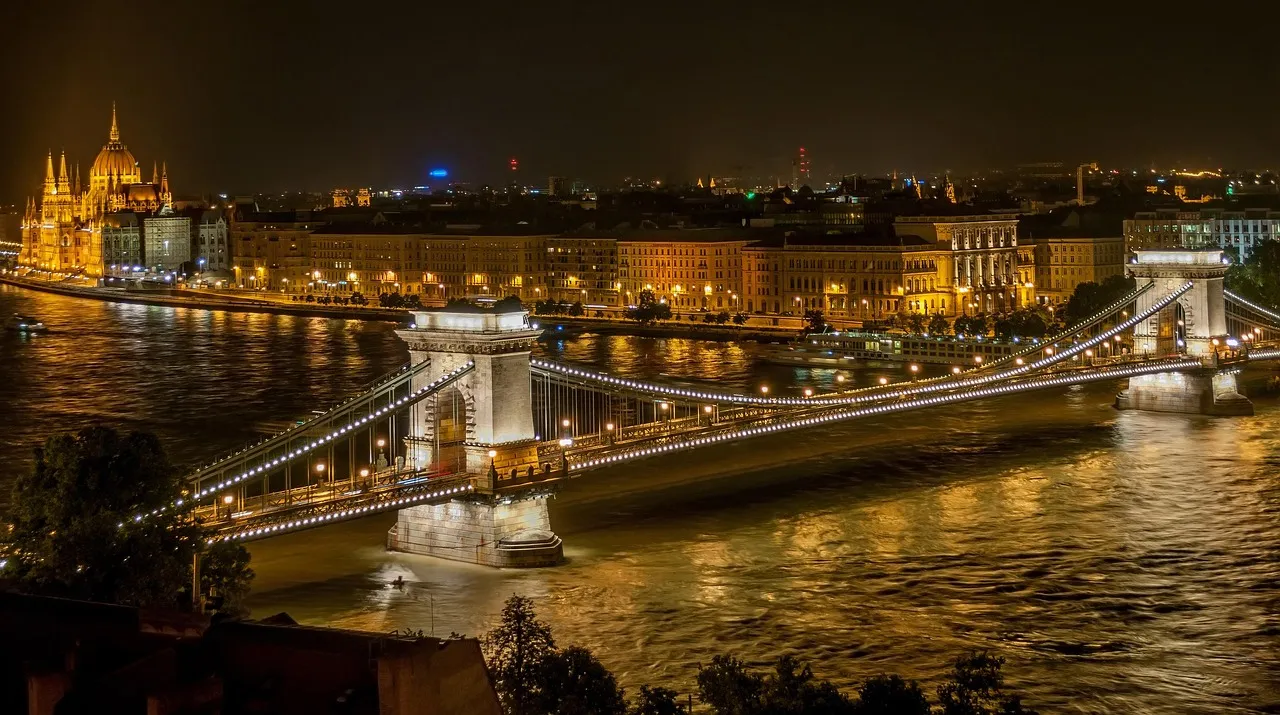
Start by walking over the Chain Bridge, the city's most famous bridge, then ride the little funicular up to castle hill, or walk up if the queue is long.
On top, the old castle district has cobbled streets, Matthias Church with its patterned tiled roof and, beside it, Fisherman's Bastion: a run of white turrets and terraces with the best views over the river to Parliament.
Stay on the Buda side for dinner, then walk down to the riverbank to see Parliament lit up after dark.
Day 2: Parliament and Pest
The Hungarian Parliament Building is the city's landmark, a huge neo-Gothic palace on the river. The inside is only open on guided tours, and they often sell out, so book a timed ticket online a few days ahead.
From there, walk to St Stephen's Basilica, where you can climb or take the lift up to the dome for a view across Pest. Then follow Andrássy Avenue, a grand boulevard lined with mansions and the Opera House, or ride the metro line underneath it, one of the oldest underground railways in the world.
- Lunch: the Great Market Hall, at the end of Váci Street, has stalls selling lángos (fried bread) and paprika.
- Evening: the ruin bars of the old Jewish Quarter, set up in crumbling courtyards, with Szimpla Kert the best known.
Day 3: the baths and City Park
Budapest sits on more than a hundred hot springs, and a few hours in a thermal bath is the best way to spend a day here, whatever the weather.
The Széchenyi Baths in City Park are the most famous, with big outdoor pools of hot spring water that steam in winter, and indoor pools at different temperatures.
- Bring: a swimsuit, flip-flops and a towel, or hire a towel there.
- Allow: at least two or three hours, so you can try several pools.
The outdoor pools at Széchenyi are open all year, and sitting in hot water with snow on the ground around you is one of the best things to do in Budapest in winter.
Afterwards, walk through City Park to Heroes' Square and Vajdahunyad Castle, and finish the trip with an evening cruise on the Danube, when all the bridges and Parliament are lit up.
Getting there and getting around
Budapest is about two and a half hours' flight from London, with direct flights from several UK airports. The 100E airport bus runs to Deák Ferenc tér in the centre in about 40 minutes and costs around 2,500 forints, though check the current fare on the BKK website.
- Money: Hungary uses the forint, not the euro. Cards work almost everywhere.
- Time: one hour ahead of the UK.
- Where to stay: Pest, between the Basilica and the river, is the most convenient base.
When to go
Spring and early autumn are the most pleasant times for walking, and the city is busy but not overwhelming. Summer can be very hot, which makes the baths and the riverside more appealing.
In winter, Budapest's Christmas markets on Vörösmarty Square and outside St Stephen's Basilica usually open in mid-November and run into the new year. Our post on Budapest or Krakow at Christmas compares the two.
Our Budapest guide has more on the weather month by month, and our 3-day city break post has more ideas like Prague and Vienna. If you can't agree where to go next, put them all in a draw on somewhere.party.