The short answer
- Quietest of all: weekdays from November to early February, avoiding Christmas, New Year and Carnival.
- Quiet with better weather: midweek in late April to early June or mid-September to October, avoiding Easter and public holidays.
- Busiest: July and August, Easter, Carnival and summer weekends.
Whatever month you choose, the time of day matters almost as much. Day-trippers fill the centre from about 10am to 5pm, so staying overnight gives you a completely different, much quieter city in the early morning and evening.
Why Venice gets so crowded
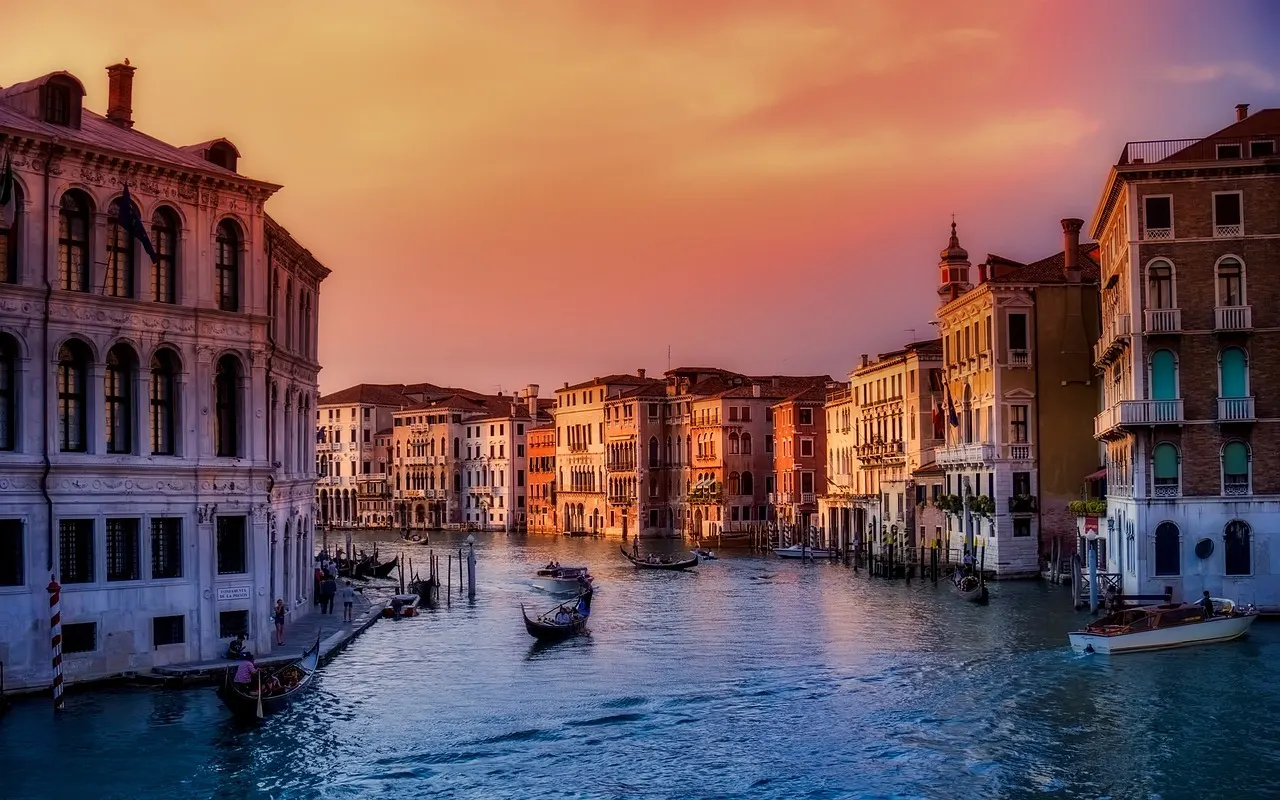
Venice's historic centre is small, and a huge share of its visitors come only for the day. They arrive by train, coach and tour boat in the late morning, crowd the route between the station, the Rialto Bridge and St Mark's Square, and leave in the late afternoon.
Large cruise ships have been banned from the lagoon's main channels since 2021, which has helped. But day-trippers still make up most of the crowds on busy days.
To manage this, Venice has charged day-trippers an access fee on set peak days. In 2026, it applied on 60 days between April and July, mostly weekends and holidays, between 8.30am and 4pm. People staying overnight in Venice are exempt but must register. Check the official site for next year's dates before you go.
Month by month
- November: quiet, misty and atmospheric, with lower hotel prices. It's also the start of the acqua alta (high water) season.
- December: quiet until the run-up to Christmas, then busy over Christmas and New Year.
- January: one of the emptiest months after New Year's Day. Cold and damp, but often crisp and clear.
- February: quiet until Carnival, which usually takes over the city for about two weeks before Lent. In 2027, Shrove Tuesday falls on 9 February, so Carnival runs from late January.
- March: quiet early on, then busier towards Easter, which is on 28 March in 2027.
- April to June: pleasant weather but rising crowds, especially at weekends and on Italian public holidays like 25 April and 1 May.
- July and August: hot and very crowded. The Redentore festival in mid-July is a highlight, but it's busy.
- September and October: warm, with fewer visitors than summer, especially midweek in October.
What about acqua alta?
High tides can flood the lowest parts of Venice, including St Mark's Square, mostly between November and April. Since 2020, the MOSE flood barriers have protected the city from most serious high tides, so flooding is much less frequent than it used to be.
If it does happen, it usually lasts a few hours around high tide. Raised walkways go up on the main routes, and shops sell cheap waterproof overboots. It's rarely a reason to avoid winter, and some visitors find it part of the experience.
Where to stay to beat the day crowds
Where you sleep makes a bigger difference in Venice than almost anywhere else. Most visitors come in for the day, so if you stay in the historic centre you get the early mornings and evenings when the streets are calm. Cannaregio and Castello are quieter, more residential parts of the city with plenty of places to stay. Dorsoduro is close to the Accademia and has a relaxed feel in the evenings.
Staying in Mestre on the mainland is cheaper, and the train or bus into Venice takes around ten minutes, but you'll arrive with the day trippers and leave just as the city empties. If you can afford even one or two nights in the centre, that is often worth more than an extra day based outside it. Staying overnight also means you don't need the day-trip access fee on the days it applies, though you'll pay the local tourist tax through your hotel.
How to avoid the crowds whenever you go
1. Stay overnight. Early morning and evening Venice is magical and much quieter. 2. Go midweek. Tuesday to Thursday are usually quieter than weekends. 3. See St Mark's early or late. Visit the square before 9am or after 6pm, and book timed tickets for the basilica and the Doge's Palace. 4. Explore quieter areas. Castello and Cannaregio feel much more local than the area around the Rialto. 5. Go out to the islands. Torcello is peaceful, and Burano and Murano are quieter in the morning. 6. Walk, don't follow the signs. The main yellow signs lead along the busiest routes. Side lanes are often almost empty.
If Venice still feels too busy
For canals without the crowds, try Giethoorn in the Netherlands, Bruges or Ghent in Belgium, or Annecy in the French Alps. Elsewhere in Italy, Verona and Bologna are an easy train ride from Venice, and much calmer.
Our Venice guide covers where to stay and what to see. For more Italian ideas, see Holidays in Italy. For more crowd-free ideas, read our posts on alternatives to Dubrovnik and alternatives to Santorini.
If you can't decide between Venice and somewhere quieter, our guide to how to decide where to go on holiday can help.