The short answer
For the best view of Madeira's coast and mountains on the way in, choose a window on the right-hand side of the plane (seat F on most short-haul jets from the UK), a few rows in front of the wing.
That's guidance, not a guarantee. The way the plane comes in depends on the wind on the day, and both sides usually get some view, because the approach involves flying close along the coast and turning near the runway. If the right side is sold out or costs more than you want to pay, the left side still often sees the cliffs on the final turn.
Why the landing is special
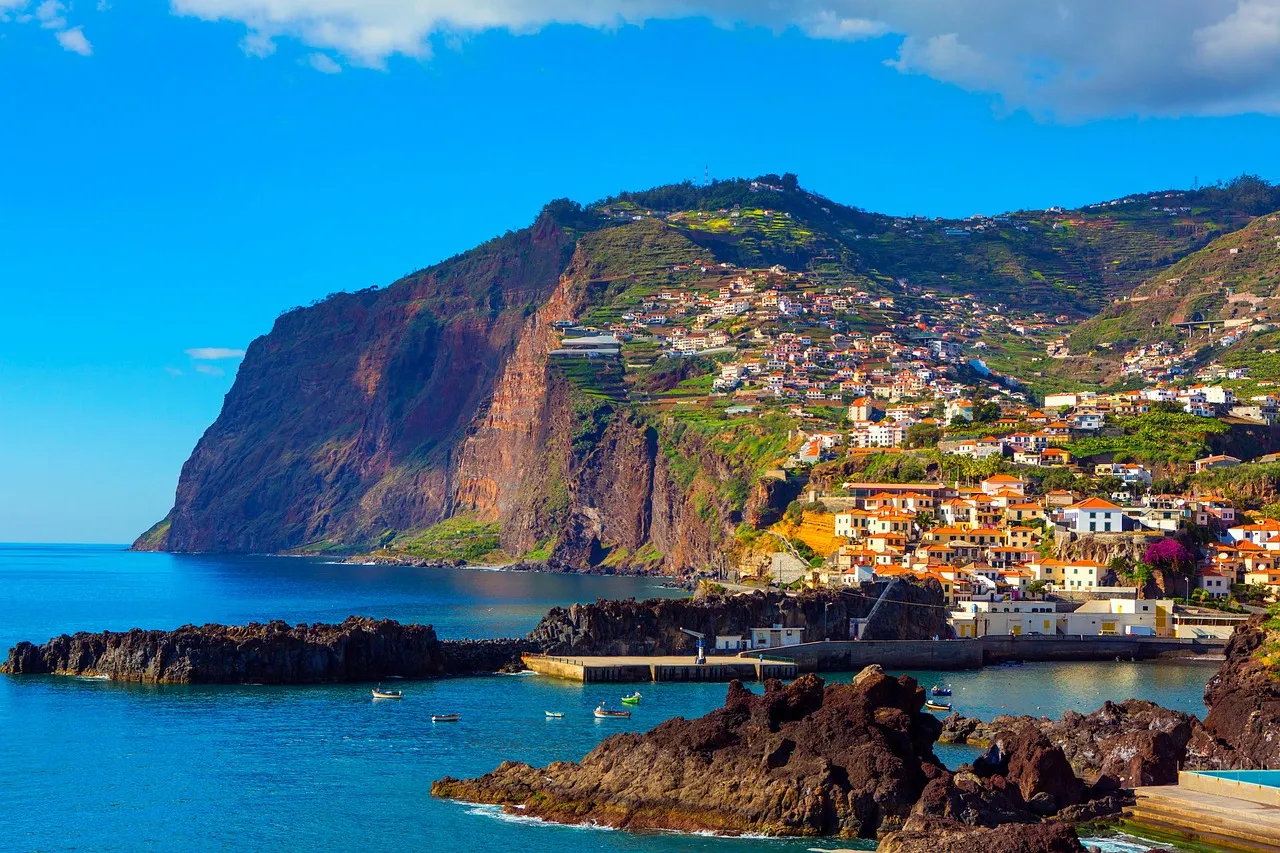
Madeira's main airport, officially Cristiano Ronaldo International, sits on a narrow strip of coast at Santa Cruz, east of Funchal, with steep hills right behind it. The runway was famously short until it was extended in 2000. The extension sits on a platform supported by around 180 columns, partly over the sea, which you'll see as you come in.
The approach is flown visually close to high ground, and wind coming over the mountains can make it bumpy. Pilots need extra training to land there, and the airport is a favourite with aviation fans. For most passengers, it's simply the best landing view you'll get on a European holiday flight.
How the approach usually works
Madeira's runway runs roughly north-east to south-west along the coast. Which end planes land from depends on the wind:
- The usual way in: planes often fly down past the airport parallel to the coast, a short way out to sea, with the island on the right. They then make a tight turn back over the sea and line up for a short final approach. The right side gets a long look at the coast, Santa Cruz and the hills, and the left side may see the cliffs and runway during the turn.
- The other direction: in different winds, planes come in along the coast from the north-east and land heading south-west. The island is again on the right, so the right side tends to win here too.
Routes vary, and air traffic control and the weather decide on the day. If you want to see recent approaches, flight-tracking apps show the paths of earlier flights into Funchal.
When the wind wins
Strong wind at Madeira airport is common enough that it's worth knowing about. When it's too gusty to land safely, planes hold for a while, try again, or divert, usually to Porto Santo, the smaller island nearby, and sometimes to Lisbon or the Canaries. On bad days, dozens of flights can be delayed, diverted or cancelled.
It doesn't happen on most days, but it's more likely in autumn and winter storms. It's a good reason to:
- Avoid tight connections or same-day plans on arrival.
- Keep essentials in your hand luggage in case you end up spending a night elsewhere.
- Check your travel insurance covers delays and diversions.
A bumpy approach followed by a go-around is uncomfortable, but it's the crew being careful, not a sign anything is wrong.
The rest of the flight
Flights to Madeira from the UK take around 3 hours 45 minutes to 4 hours, mostly over the sea. A few more tips for a good view:
- Sit in front of the wing. On an A320 or 737, the wing covers the middle third of the cabin and blocks much of the view down.
- Think about the sun. Flying south, afternoon and evening sun comes in on the right. That gives a lovely golden light over the island, but it can also mean glare in the cabin earlier in the flight.
- Coming home, the view is less predictable. If you get a window, the climb out over the coast is often worth watching.
Our general guide to which side of the plane to sit on covers how this works on other routes from the UK.
Watching from the ground
If you're an aviation fan, you can watch planes land from viewpoints near the airport and the runway extension. It's easy to combine with a trip to Santa Cruz or Machico, the town where the first settlers landed, a few minutes up the coast.
For more on the island itself, from levada walks to the best time to go, see our Madeira guide. If you're still choosing between islands, our Madeira or Tenerife comparison and our guide to winter sun with no jet lag can help, and the holidays in Portugal page has more ideas.