The short answer
- One week, one baseRhodes
- 10 days or moreCrete
- Hottest in summerRhodes, about 31°C
- Best for hikingCrete
Both are about four hours' flight from the UK, both use the euro, and both are two hours ahead. The difference is size. Crete is roughly six times bigger than Rhodes, and that changes everything about how you plan the trip.
Crete and Rhodes side by side
| Crete | Rhodes | |
|---|---|---|
| Size | about 260 km end to end | about 80 km end to end |
| Airports | Heraklion and Chania | Rhodes |
| Ideal stay | 10 to 14 nights | 7 to 10 nights |
| Car needed? | Yes, really | Helpful, not essential |
| July high | about 29°C | about 31°C |
| Big sights | Knossos, Samaria Gorge, Chania | Rhodes Old Town, Lindos |
The temperatures are average daytime highs from our Crete and Rhodes guides.
Why Rhodes works for a week
Rhodes packs a lot into a small island:
- Rhodes Old Town is one of the best-preserved medieval towns in Europe and a UNESCO World Heritage Site, with the Knights' Street and the Palace of the Grand Master inside its walls.
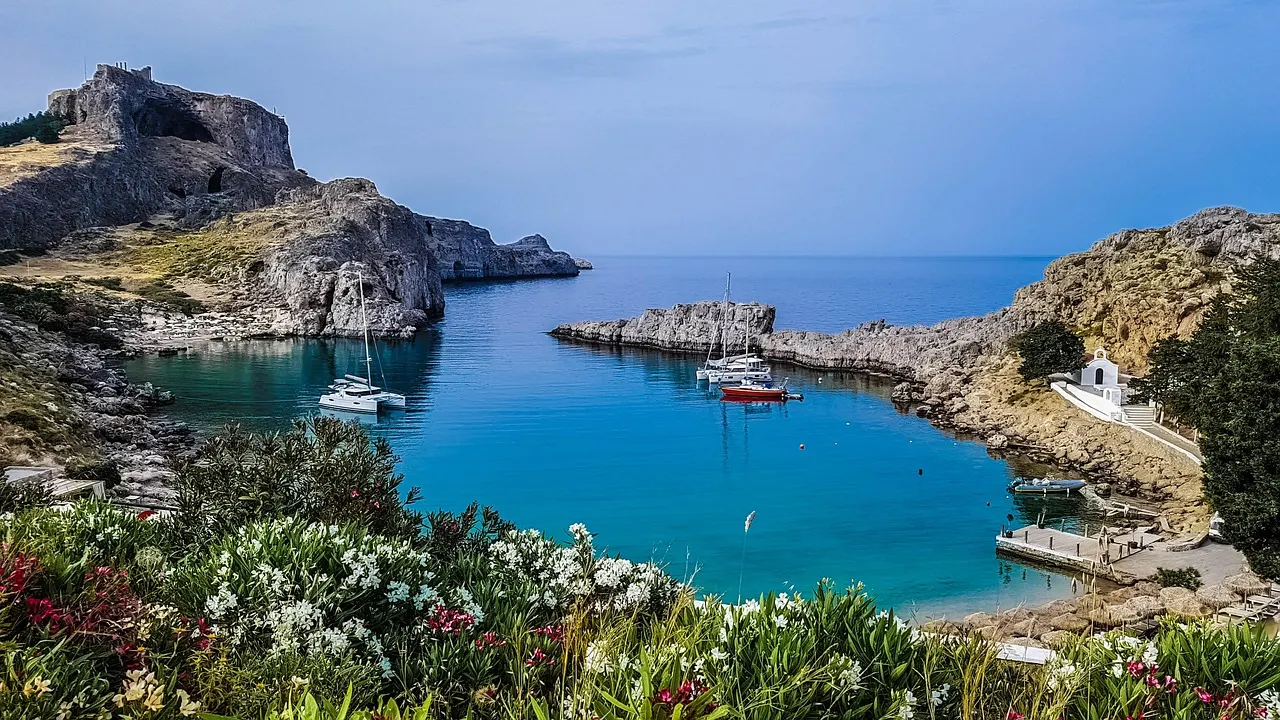
- Lindos, an hour or so down the east coast, is a whitewashed village under a clifftop acropolis, with a beach right below.
- Prasonisi, in the far south, is where two seas meet at a sandy spit, popular with windsurfers.
- Anthony Quinn Bay is a small, clear cove for snorkelling.
Because distances are short, you can stay in one place and still see all of this on day trips, by bus, taxi or a few days' car hire. There's also a ferry to the pastel harbour town of Symi for a day out.
Why Crete needs more time
Crete is the biggest Greek island, and driving from Chania in the west to Heraklion in the middle takes about two hours. Most people pick one end and explore from there, or split the trip between two bases.
- West Crete: Chania's Venetian harbour, the pink-tinged sand at Elafonissi and the Balos lagoon, reached by boat or a rough track.
- Central Crete: the Minoan palace of Knossos, linked to the legend of the Minotaur, and the archaeological museum in Heraklion.
- The south coast: quieter villages and beaches, reached over the mountains.
The Samaria Gorge is one of Europe's best-known walks, about 16 km downhill to the sea. It's usually open from May to October, weather permitting, though in 2026 it opened late, on 19 May, after storm damage to the trail.
Beaches
Both islands have very good beaches, but they're different:
- Rhodes: long, sheltered beaches and calm water on the east coast, from Faliraki down to Lindos, which suits a classic beach week. The west coast is windier.
- Crete: more variety, from the shallow lagoons at Balos and Elafonissi to quiet coves on the south coast. The best ones often need a drive and an early start to beat the coach trips in July and August.
Costs and tickets
Prices are similar on both islands, and both have plenty of all-inclusive and self-catering options. The costs to plan for:
- Car hire in Crete, for most of your stay.
- Knossos: about €20 for adults in 2026.
- Samaria Gorge: €10 in 2025.
Check the official Greek heritage ticket site, hhticket.gr, for current prices and to book ahead in summer.
When to go
The best months for both are May, June, September and October, when the sea is warm but it's not too hot for sightseeing. July and August are hot and busy, cooled a little by the meltemi wind.
Direct flights from the UK run mainly from April or May to October. Out of season, Rhodes Town and Heraklion stay open, but most resorts close, so neither is a winter-sun choice.
So, which one?
- Choose Rhodes for a week with one base, history on your doorstep, easy beaches and the least driving.
- Choose Crete for 10 to 14 days, a road trip, hiking and the feeling of a place with more to discover.
If you've already done one, the other makes a very different second trip. Our guide on how to choose between two holidays can help, or browse more islands on our holidays in Greece page, such as Corfu or Kos. Can't agree? Add both to somewhere.party and let the draw pick, or read our guide to deciding where to go on holiday.