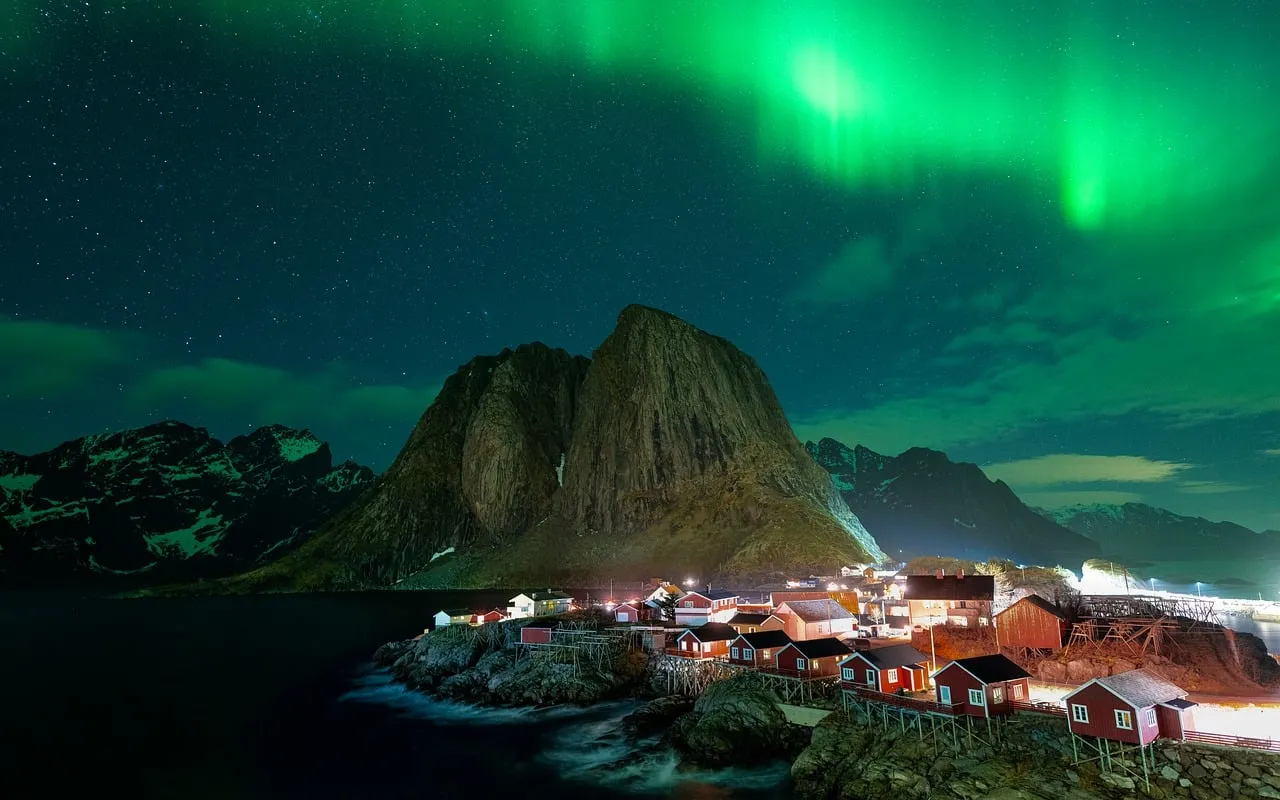
Holidays in Lofoten
Jagged peaks rising from the sea, red huts and the midnight sun. Here's what the Lofoten Islands are like with the family, when to go and how long to stay.

Norway follows Europe's border rules. Check entry rules on GOV.UK before you book.
June to August has round-the-clock daylight and the best weather for hiking and kayaking. February and March bring snowy peaks and northern lights with returning daylight. Late autumn and early winter are dark and stormy.
White sand and turquoise water under mountains. The sea is cold, but paddling is fun.
Paddle between islands and fishing villages with a guide.
A rebuilt Viking chieftain's longhouse with boats to row.
A boat trip into the narrow Trollfjord to watch eagles dive.
One of Norway's oldest fishing villages, with red huts on stilts.
Short climbs with huge views. Ryten and Offersøykammen suit older children.
Yes, for outdoorsy families. It's safe and spectacular, with beaches, boats and hikes. Staying in a rorbu, a red fisherman's cabin, is half the fun.
Five to seven nights, with a hire car to explore.
No, British passport holders can visit Norway for up to 90 days in any 180 without a visa. New European entry checks are being brought in, so check GOV.UK before you travel.
Fly via Oslo to Bodø, then take the ferry or a short flight to the islands. Some families drive up and over the bridges from Narvik.
Put Lofoten on standby with everyone's other ideas. You each spread your points in secret, get one veto, and the draw picks where you go.